revoluAItion

Manual · 1.0 — September 2026

How revoluAItion works, end to end

revoluAItion turns a founder's marketing into a loop that runs itself: research, angles, drafts, a schedule and a verdict on what worked. Six agents do the work; a member approves everything before it leaves the building.

The six agents: Scout, Signal, Strategist, Forge, Cadence and Verdict

3 further parts cover how the system is built, run and secured. Those are internal and only visible to the account owner.

Everyone

1. Using revoluAItion

Setup, the six agents, approvals, the queue and measurement — in plain language.

Your first hour

Ten minutes of setup decides how good every later output is. The Brain — everything the system knows about your business — is the product. Fill it properly once and the agents stop guessing.

  1. 1Add a business and let Scout read your website.
  2. 2Fill the Brain: positioning, ideal customer, voice, goals and brand style.
  3. 3Answer the Brand Foundation interview: what you are, who you serve, what they need, the alternatives, what you offer, how you differ, why you exist.
  4. 4Add evidence for any claim you want used in public, and boundaries for anything you will never say.
  5. 5Run the agents once so there is something real to review.
  6. 6Approve the drafts that sound like you. Nothing publishes without that approval.
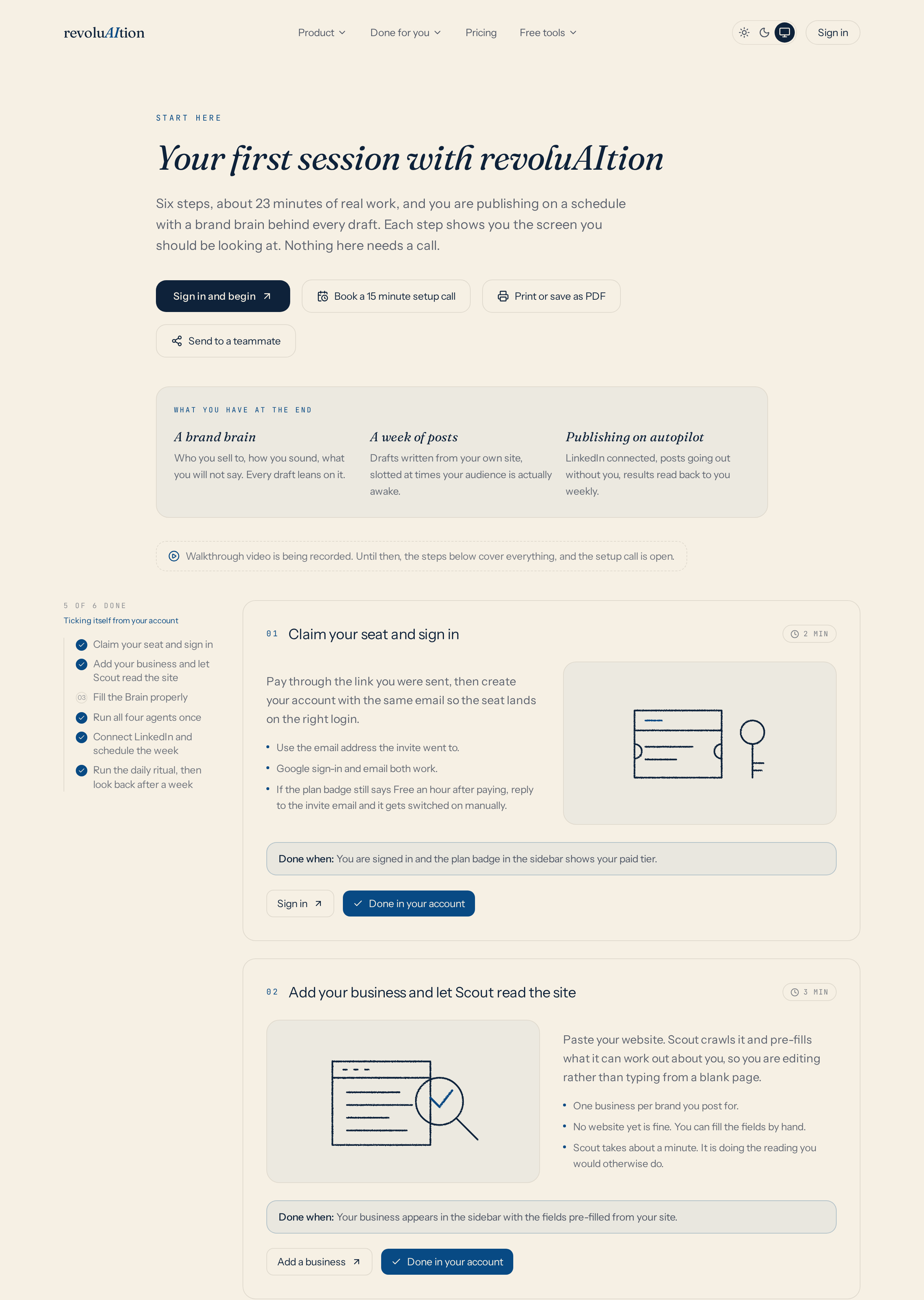
The start guide walks the same six steps and ticks itself off as you complete them in your account.

The six agents

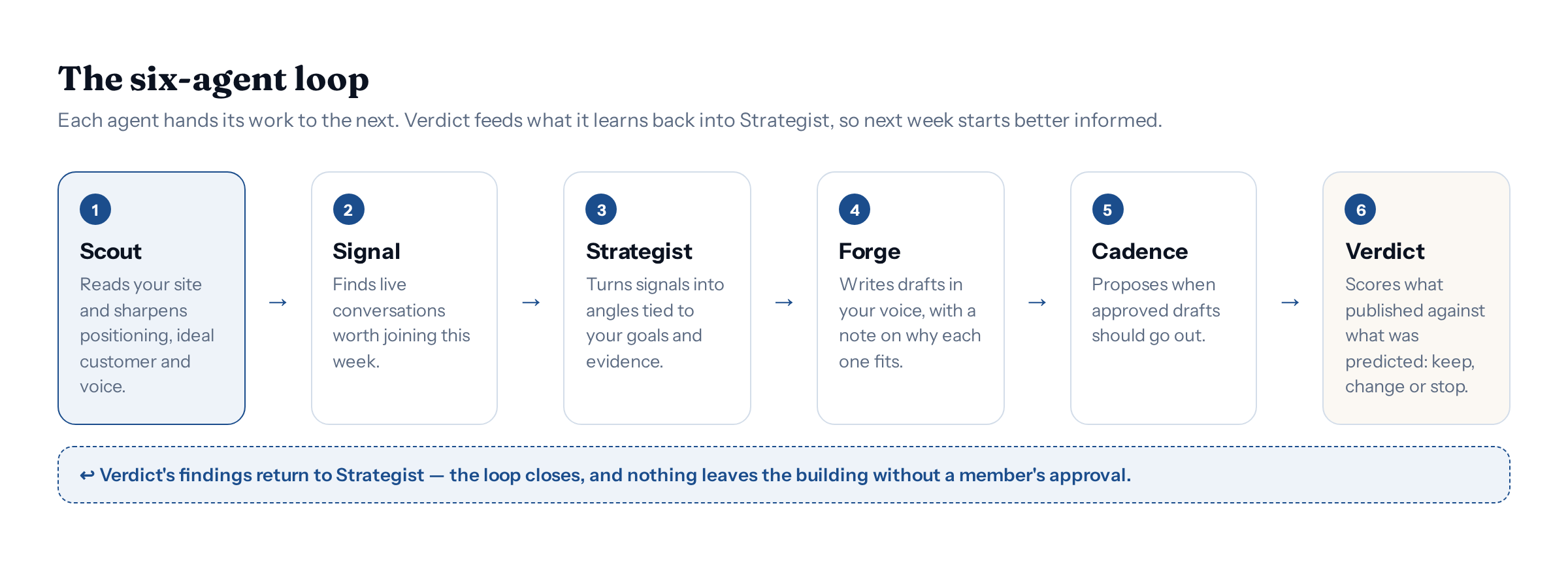
The agents run as a loop. Each one hands its work to the next, and the last one feeds what it learned back to the planner.

Figure 1 — The six-agent loop, from research to verdict and back again.
AgentWhat it does
ScoutReads your site and market, sharpens positioning, ideal customer and voice, and flags contradictions in what you say about yourself.
SignalFinds live conversations, competitor moves and news worth reacting to, ranked by fit with your audience and offer.
StrategistTurns signals and goals into angles and deliverables, each tied to a customer need and a point of view.
ForgeWrites drafts in your voice, and attaches a note explaining why each one fits your brand.
CadenceProposes a publishing schedule for approved drafts, timed to when your audience is awake.
VerdictScores predictions against real results and says keep, change or stop — and says plainly when there isn't enough data yet.

Brand Foundation, evidence and boundaries

The Brand Foundation is a short guided interview held inside the Brain. Once approved, its answers are treated as settled strategy: the agents work from them and never invent a missing answer. Anything you mark unresolved stays an open question rather than a gap the machine fills in.

  • Evidence sets the ceiling on claims. An opinion can be stated as a view; a number needs a measured record behind it; anything marked internal never appears in public writing.
  • Boundaries are hard bans. Things you will never say, never promise, never join, and the customers who are the wrong fit. They outrank any performance expectation.
  • Approving a new version supersedes the old one. Editing an approved foundation drops it back to draft until you approve again.

The daily ritual, writing and the queue

Reach follows behaviour, not just posting. The ritual front-loads the engagement that makes your own post land.

  1. 1Comment on scored feed posts before you publish anything.
  2. 2Clear messages and endorsements while you are there.
  3. 3Draft in the composer, or promote a hook from the Idea Bank; the hook meter and pre-publish check flag weak writing and lazy calls to action.
  4. 4Schedule into the queue or drag onto the calendar, and use Fill my week when the queue thins.
  5. 5Publish once the ritual bar is green, and keep the streak.
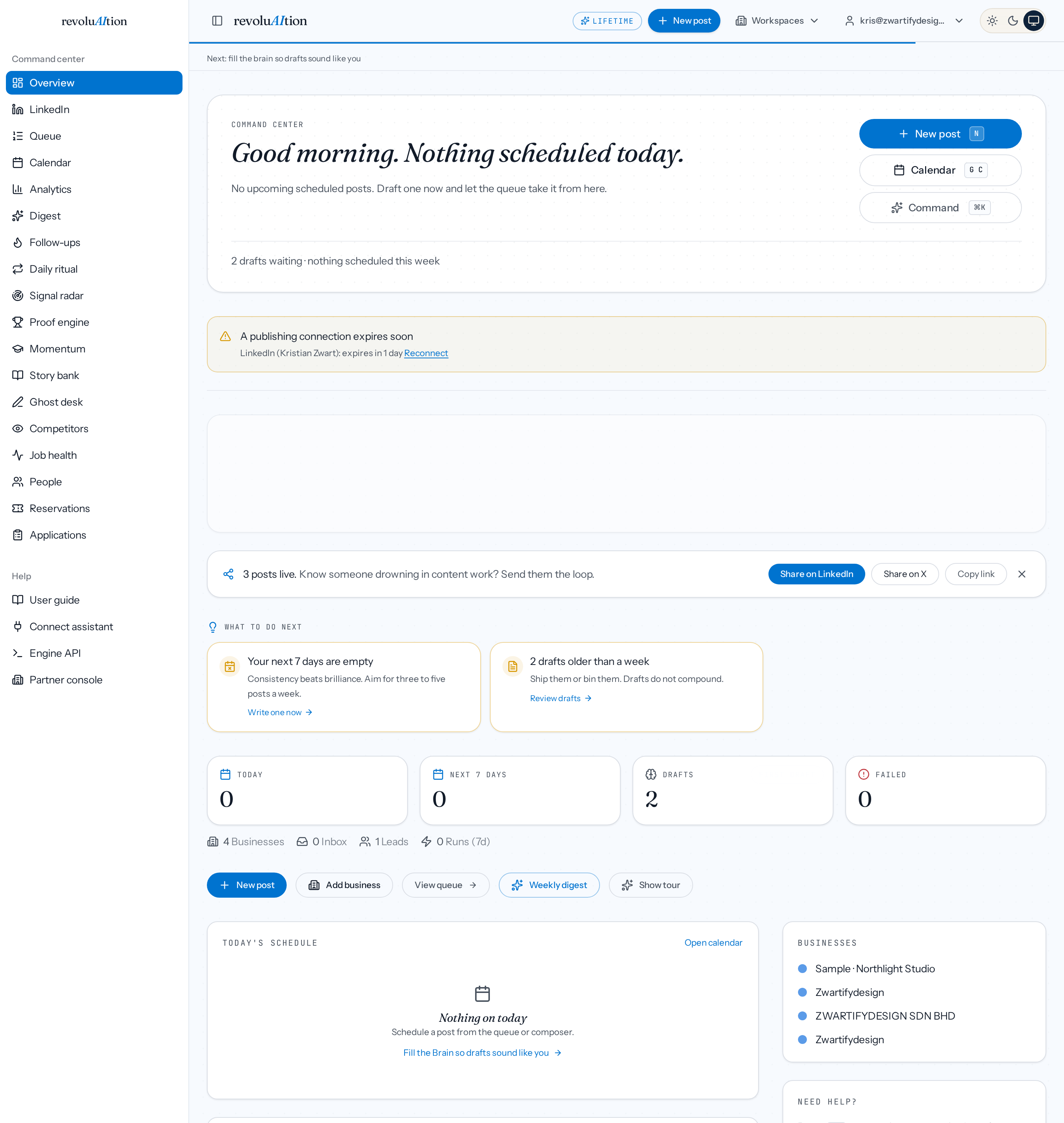
The overview: what is scheduled today, what needs attention, and what to do next.
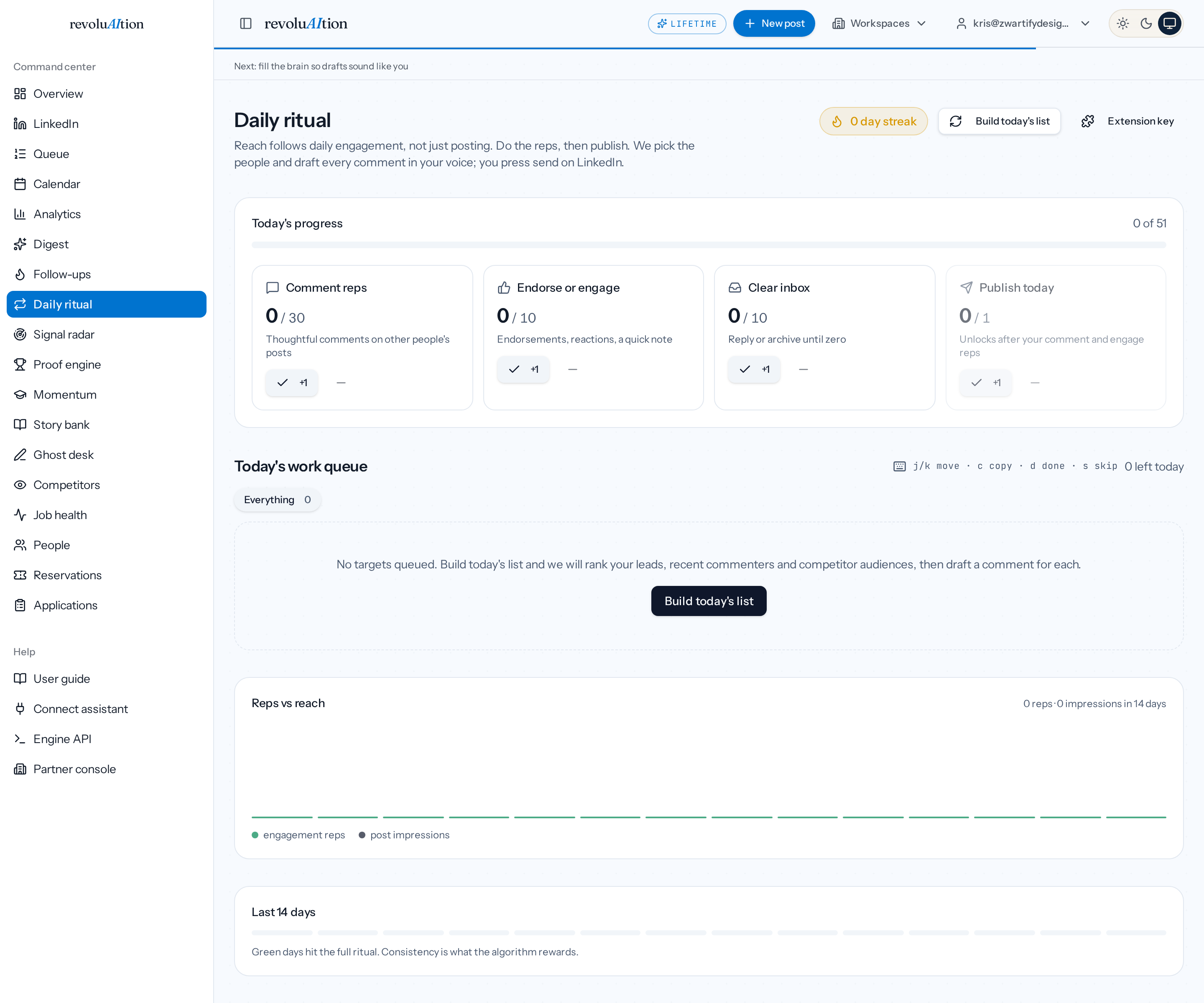
The daily ritual tracks comments, engagement, inbox and the one post that unlocks after them.
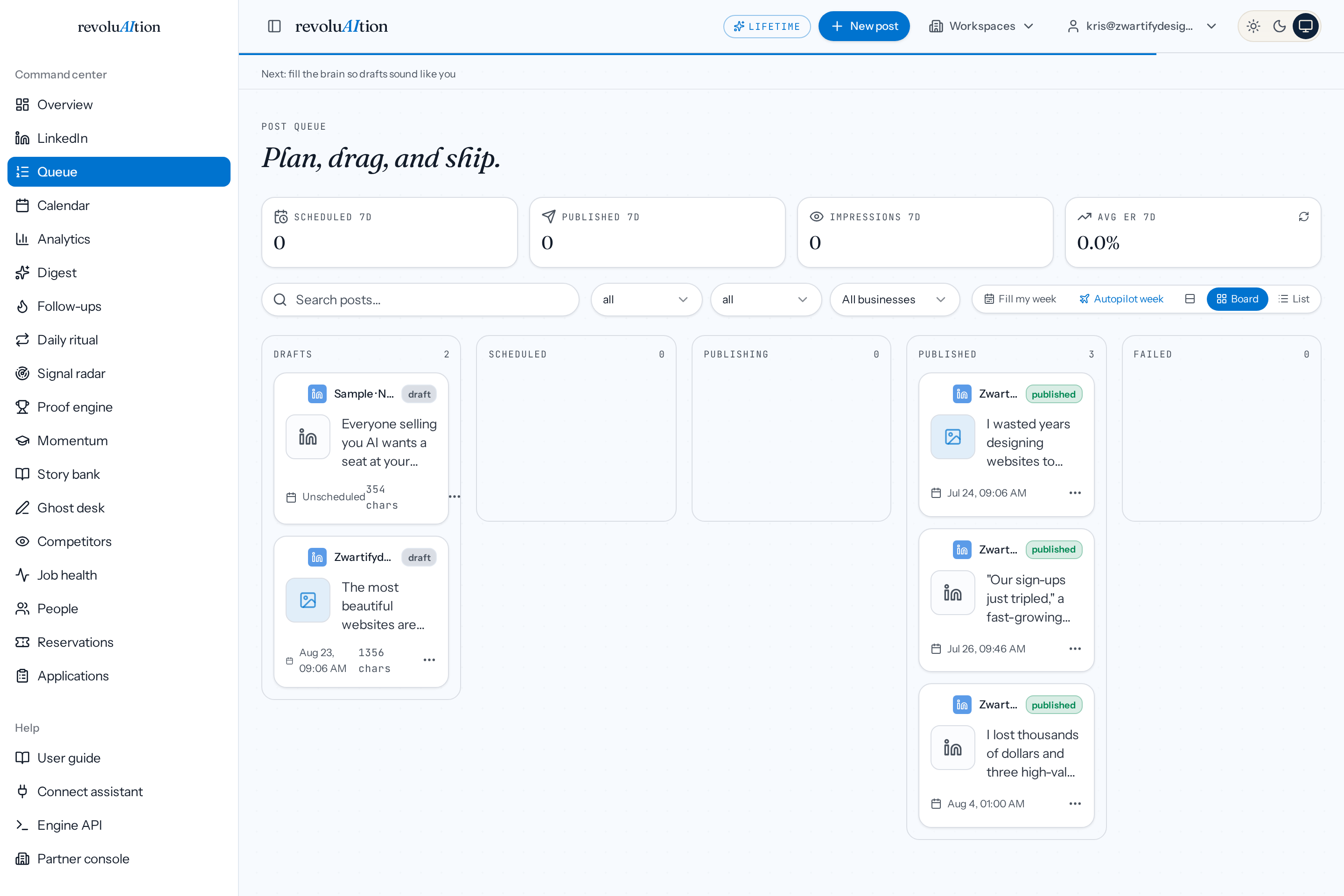
The queue: drafts, scheduled, publishing, published and failed, all on one board.

Approvals and safety

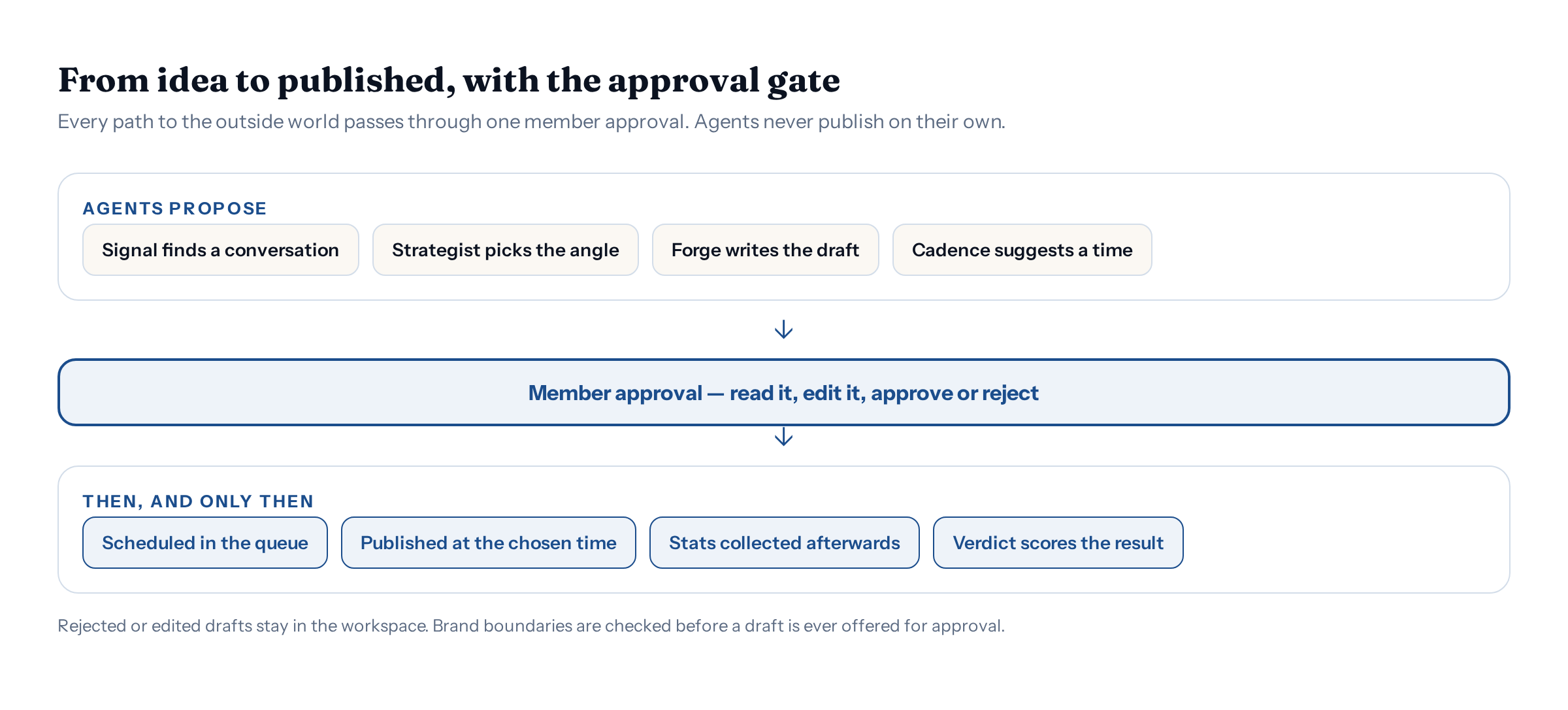
  • Nothing posts without a member approving it. Automation fills the queue; it never bypasses the approval step.
  • On the ghost plan a human LinkedIn ghostwriter signs off every post as well.
  • Every draft carries a fit note: the audience, the objective, the message, the evidence it leans on, and anything still unproven.
  • Failed publishes surface in Job health with the exact error, rather than failing silently.
Figure 2 — Every route to the outside world passes through one member approval.

Measuring what worked

  • Analytics pull real post performance back into the system each morning.
  • Verdict compares what was predicted against what happened and gives a keep, change or stop call.
  • Receipts show tokens and cost per run, so you can see what each output cost to produce.
  • The returns to watch: research, writing, scheduling and review time collapsing into minutes of review, cost per approved and published post, prediction hit rate, and engagement per post over time.
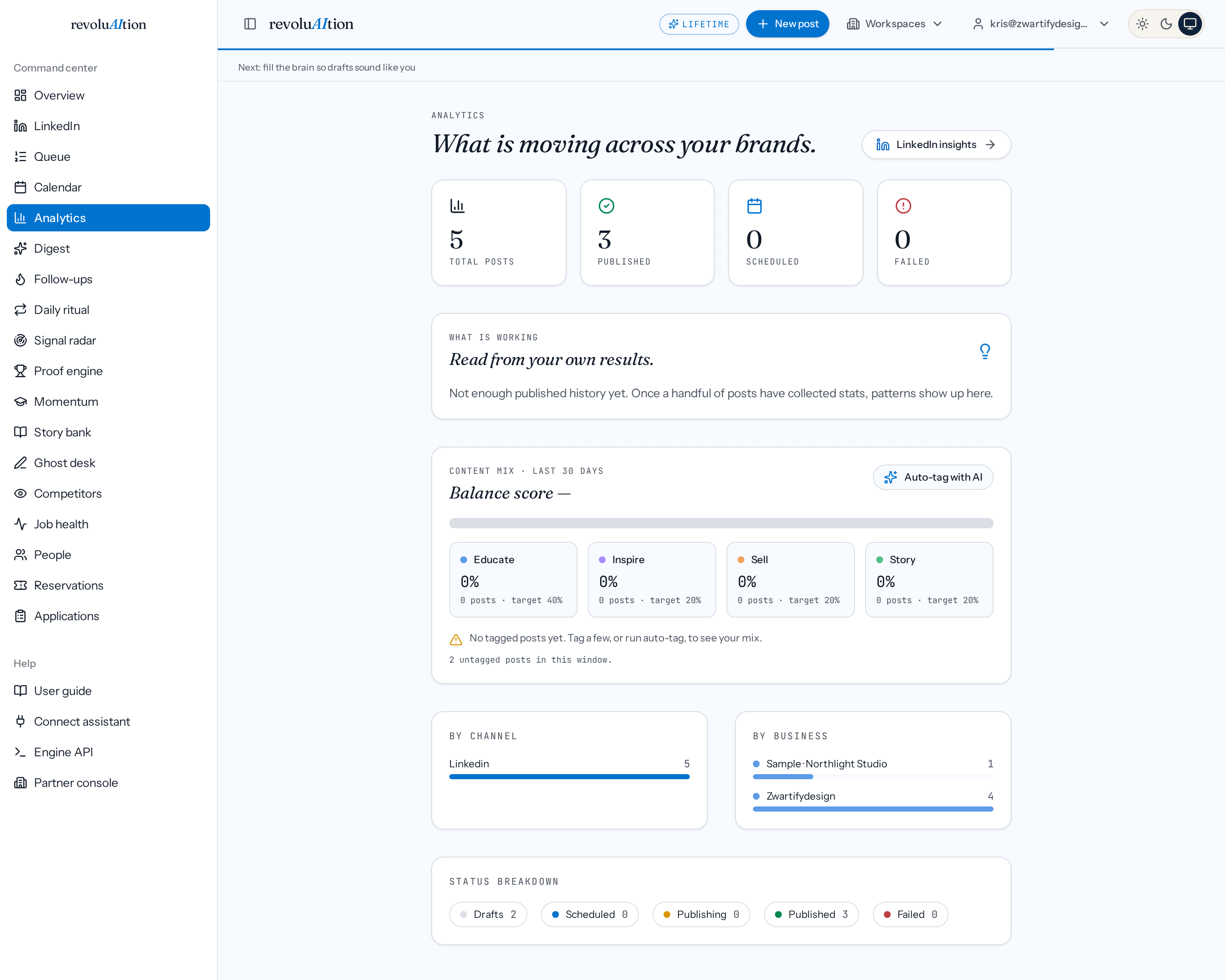
Analytics: what published, what it earned, and how the content mix is balanced.